Civic Duty
Paul’s exposition presents a timeless framework for Christian engagement with civil authority, grounded in four interrelated principles: obedience, decency, conscience, and propriety.
Transcript
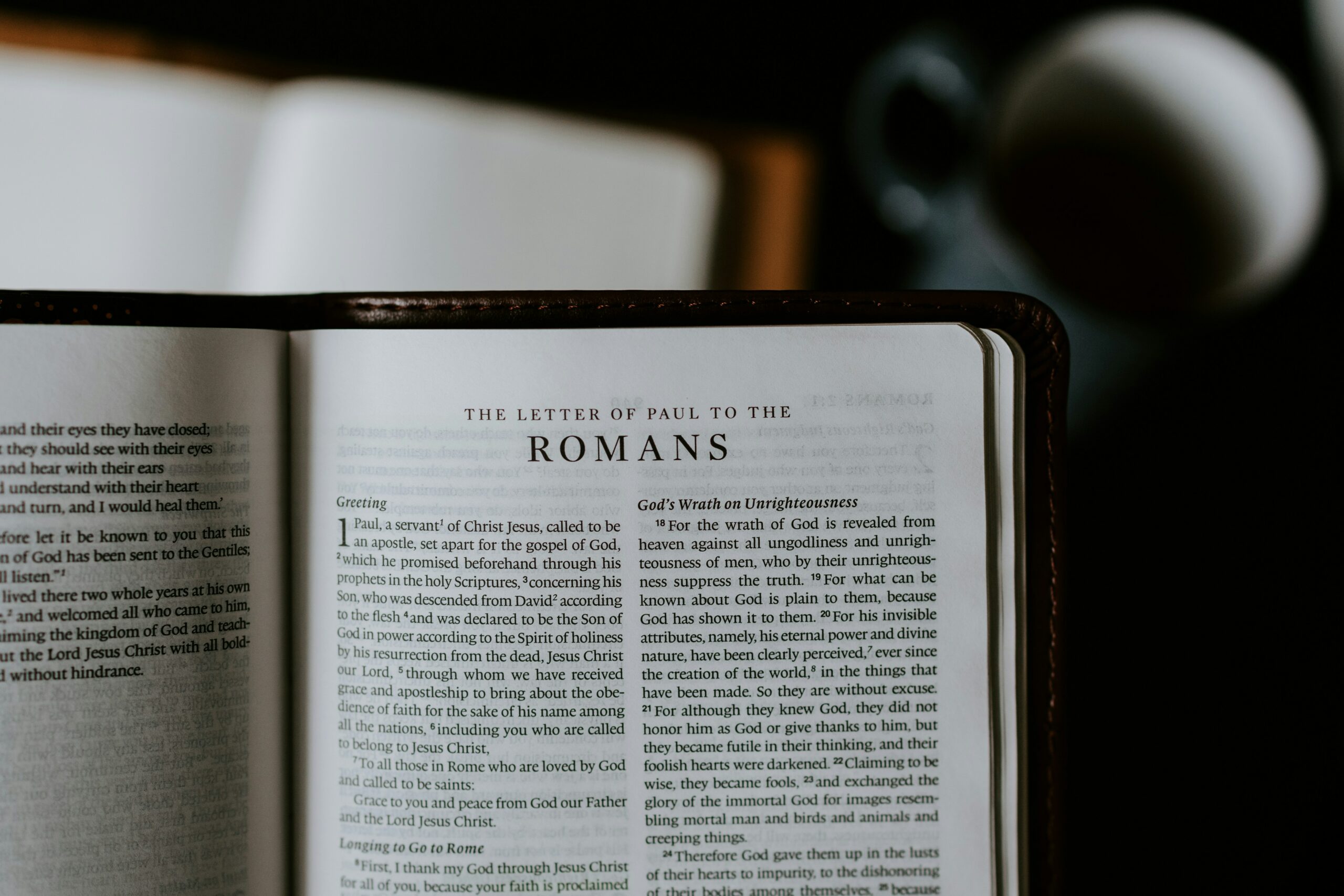
Well, after a bit of a break, we return to our study, our flyover of Paul’s letter to the Romans. If you please turn there, Romans chapter 13, a tremendously important chapter of scripture. And as important as this chapter is, and since we’ve been away from Romans for several weeks, we need to kind of reset the context. In chapter 12, Paul has made a decisive break from the heavy doctrinal teaching in his first 11 chapters. He’s dealing now with practical application of those teachings.
And after a direct exhortation, to individual believers in verses one and two, and an equally direct exhortation to the church in general, in verses three through eight, Paul then, in verse nine, begins to address relationships. How we as Christians are supposed to relate to one another. And my overall title for that entire section is Life with Others. Not just conversing, but living in relation with one another. Paul begins that discussion with thoughts about life with other believers in verses 9 through 13. Then in verses 14 through 16, he turns his attention to our demeanor toward others in general.
Not only other believers, but those even outside the church who may be even unkind to us. Paul instructs that we should develop an others-oriented mindset that desires good for those who might have a contrasting opinion of us. Empathy, he urges, for those of varying life circumstances, and a humility toward those with differing perspectives. And then lastly, at the end of chapter 12 verses 17 through 21, Paul addresses dealing with foes, what he characterizes as enemies, those who have declared themselves as our enemies, not we them, those who are hostile to us, And there he provided us with four principles for dealing with those who consider us as enemies.
We are to show them restraint, not returning evil for evil. We are to provide for them a civility, a peaceableness, respecting what is objectively right. We are to show diplomacy, being at peace with all men, and we are to remember that there will be a reckoning. We are to leave room for the wrath of God.
And that brings us to chapter 13. There are many commentators, however, who are somewhat stymied at what they see as a lack of connection between Romans 13 and Romans 12. But the context is still the same. It’s another practical discussion of life with others.
Here, Paul turns his attention to the believer’s relationship to civil authority. This was an extremely important subject for Paul to address to the Church of Rome. Indeed, it’s an extremely important one for any church in any society and any age. Under the Roman government of Paul’s day, the church in Rome was in an exceptionally delicate position.
Emperors, also called Caesars, ruled with a very heavy hand. Their authority was absolute, often harsh and cruel. Some Caesars were worse than others, but at the time of Paul’s writing to the Church of Rome, none other than the very vicious Nero was emperor. Nero was an exceedingly cruel tyrant, infamous for bringing Christians into his arena for sport, to fight with wild animals, bulls and lions.
His brutality, though, reached a new low when he burned down his own city in order to build bigger and better buildings, and then he blamed the Christians, which set off a violent season of persecution against Christians that really spread throughout the entire Roman Empire. The Jewish people themselves had already been marked as troublemakers in the city and even expelled. And so Christians would naturally have been associated with the Jewish people.
So Paul was highly motivated to caution the Roman believers in this regard. that rebellion or even just simple dissent would likely have been handled with great severity. Christians and the church that they represented were already on thin ice with the Roman government. Let’s consider Paul’s exhortation to the Christians in Rome and to believers in every age, verses one through seven. Follow along as I read, if you would.
Let every person be in subjection to the governing authorities, for there is no authority except from God, and those which exist are established by God. Therefore, he who resists authority has opposed the ordinance of God, and they who have opposed will receive condemnation upon themselves.
For rulers are not a cause of fear for good behavior, but for evil. Do you want to have no fear of authority? Do what is good, and you will have praise from the same. For it is a minister of God to you for good. But if you do what is evil, be afraid. For it does not bear the sword for nothing, for it is a minister of God, an avenger who brings wrath upon the one who practices evil. Wherefore, it is necessary to be in subjection, not only because of wrath, but also for conscience sake. For because of this, you also pay taxes. For rulers are servants of God, devoting themselves to this very thing. Render to all what is due them, tax to whom taxes due, custom to whom custom, fear to whom fear, and honor to whom honor.
This is the help that Paul provides for believers in Rome and really believers anywhere. He doesn’t address every form of government, nor does he speak to every possible contingency. He simply issues a series of principles by which believers are to live. We too live under civil authority, just like the Roman church. And we know and experience the same tension under which the Roman church lived.
And we would do well to understand first what Paul is saying, and then by God’s grace, to faithfully apply what Paul says. In short, in this short section rather, seven verses, Paul sets forth timeless principles for our relationship to civil authority and to do so in a God-honoring manner. It’s our civic duty. And Paul, in setting forth these principles of civility, if you go back to verse one, the first thing that Paul sets forth in those opening two and a half verses is the principle of obedience, the principle of obedience.
Paul initiates his discussion there of believers’ relationship with civil authority by addressing every person, literally every soul, He intends this exhortation as universal for every believer in any country, in any period of history, regardless of their social standing, their nationality, their race, their gender, their religious orientation, their social status, their political party.
None of that matters. To Paul, it’s a universal command. Every person is to be in subjection to their governing authorities. And if the command itself is broad in its scope, the particular command is sharp in its directness. Paul simply says, be in subjection to the governing authorities.
The focus here is governing authorities and literally here in the original, it’s only one word, authority. Exclusia. Strictly speaking, the word governing is supplied by our translators. And this particular word, Exclusia, has been translated many other ways in this particular context. Higher powers, the powers that be, or even simply governments.
It’s clear from the context, though, that Paul is speaking of those in office within the civil government, earthly, human, even secular rulers of various roles of governing authority, governors, kings, magistrates, presidents, rulers, even Caesar. So it’s important to note that Paul doesn’t limit this command based on the form of government, or whether or not the leader is moral, or whether or not we voted for him, or whether or not we like his or her policies. The command cuts across all forms of government. And to such governing authorities, Paul says that we are to be in subjection.
That word is a military word, refers to lining up under authority. And that subjection addresses not only what we are to do, but even addresses our heart attitude. We don’t have to like those who are in positions of authority. We don’t have to agree with everything they do or say. A respectful attitude toward them may not be warranted personally, but it is so based on their position. We cannot assume a hateful, rebellious posture toward those in civil authority.
The word subjection that Paul commands here is widely used in scripture. Peter, Peter uses the word over and over again in his first letter, with regard to every human institution, he says we are to be subject to kings and to governors. First Peter 2, 13 and 14. He uses the same word with regard to servants being subjected to their masters. First Peter 2, 18. Wives to their husbands. First Peter 3, 1. Young men to the elders of the church.
1st Peter 5.5.
Paul, likewise, uses the word widely and plentifully of believers with other church leaders, in 1st Corinthians 16, of believers toward one another, Ephesians 5.21. Again, wives to their husbands, 5.22. And both Peter and Paul use this verb repeatedly. with regard to civil authority, that we are to be subject. And so, as believers, we are to be model citizens in our general respect for those in office, in our obedience to the laws of the land, in our taxes, in our prayer on their behalf, all of it.
Now, practically speaking, I remember when I was first learning to drive, this will age me immediately, we had a fuel crisis. And Jimmy Carter, the president at the time, signed into law a 55 mile an hour speed limit. Some of you are chuckling because you remember. And I’m pretty sure that at that point in time I could have run that fast. People were furious. That rule was almost universally disliked. But it wasn’t a moral issue. And that’s the kind of thing that I’m talking about here. In such situations, we are to honor the law whether we like it or not.
Paul adds the reason behind this simple, strong and broad sweeping command. If you would glance down again at verse one there, he says, for there is no authority except from God and those which exist are established by God. He says the same thing negatively and positively. God in his sovereignty not only ordains the particular form of government, pardon me, he not only ordains the particular form of government that a nation adopts, but he places the particular leaders in their positions of leadership. That’s just an astounding truth. In his dealings with King Nebuchadnezzar, Daniel declares four times the same thing. He, that is God, removes kings and establishes kings. The Most High is ruler over the realm of all mankind and bestows it on whomever he wishes. Human government is ordained by God, Paul insists. Civil authority is a divine institution.
There is a, I would call it a certifiably ignorant bumper sticker that comes out and gets reprinted every four years. It goes like this. He’s not my president. Yes, he is. And he or someday she is so by God’s doing. With that kind of bumper sticker mentality, if you see a highway patrolman and His lights are in your rear view mirror, I would caution you against disregarding Him with just a wave of your hand.
These are God’s servants placed in their respective positions by God Himself. Now, the interesting thing about this word authority is that by its very nature, it indicates delegation. It’s a delegated authority. A person only serves in such capacity because they have been appointed, designated, placed in the position of authority by another, a greater authority, namely God. This is true whether in society, in the church, or even in the home. God has instituted the various forms of authority and those who serve in such capacities.
Well, Paul draws an obvious conclusion in verse two. He knows that authority is not a reality that will always be warmly embraced. There will always be those who grumble and chafe and even rebel against authority. And so he adds, therefore, he who resists authority has opposed the ordinance of God. and they who have opposed will receive condemnation upon themselves, right or wrong, good or evil, Republican or Democrat, communist or capitalist, cruel tyrant or kindly ruler, we are not to resist. To resist God-appointed government is to rebel against God himself. That’s what Paul says.
And as such, we will incur condemnation upon ourselves for doing so. Now, this condemnation could come either from civil authorities themselves or even from God’s own hand. If God, if from God, however, it cannot mean that a Christian will face eternal damnation for not paying a parking ticket on time. But God will chastise by some means. The most likely source of such condemnation, however, is the punishment that gets meted out by the civil authorities themselves, a fine. And as Paul’s habit, he provides an explanation even for this just punishment. Would you glance at verse three?
For rulers are not a cause of fear for good behavior, but for evil. Now, mind you, this is a very general characterization of rulers. For the most part, he says, rulers try to uphold good behavior and punish evil. Most governing authorities are against theft and murder. and most are greatly in favor of work and peacefulness in their respective communities.
Peter, discussing the same subject, asks, Who is there to harm you if you prove zealous for what is good? That’s what God expects of the rulers that he appoints. That’s the reason that he’s put them where they are. Admittedly, It isn’t always the case. They don’t always encourage what is good. There are bad rulers, but even bad rulers might accomplish something beneficial. Even a tyrant tends to keep society in order.
So the first principle that we have to understand with regard to our relationship to civil authority is this principle of obedience, subjection. We are to be in subjection to the governing authorities. And the second principle Paul begins to articulate is just about halfway through verse three. Would you glance there? Not only the principle of obedience, but secondly, the principle of decency. The principle of decency, and this particular principle is distinct from that principle of obedience, but it stems from it.
Paul says at the outset of verse three that rulers are not a cause of fear for good behavior, but for evil. Civil authority has a God-given purpose to encourage right conduct and to discourage criminal conduct. And because of that, we are to do what is right. We are to live decently. In order to arrive at his point, Paul asks a rhetorical question. Do you want to have no fear of authority? You can almost chuckle at that because the answer is obvious. Yes, of course. I don’t want to walk around and live in fear.
Paul continues, if that’s truly the case, then we ought to do what is good. We should yield ourselves to civil authorities, obey their laws, and he says, if we do, not only will we have cause to not fear authority, but civil leaders will have cause even to commend our behavior. We will have praise from them, he says. Paul explains this idea in the first phrase of verse 4, if you’d glance there. Why will civil rulers praise its own citizens for right conduct?
For it, that is civil government, is a minister, a servant of God for your good. Did you catch that? Those that are in public office are placed there by God, and they’re placed there by God for our good purpose. That word minister is the same word from which we get our word deacon, servant.
God has placed civil rulers in their respective positions to serve us. Therefore, our positive benefit that we may live in peace and good and orderly communities. Now, I’m not saying, I’ve already declared this, I’m not saying that all civil authority carries that out perfectly. There are countless examples of governing officials who are self-serving and greedy, we know that. But God’s purpose for them is to serve others, and they answer to God.
When Paul says here that we will have praise from our civil authority, we don’t need to hold Paul here to a strictly literal interpretation. Our leaders are probably not going to call us down to City Hall to give us an award, a certificate, a trophy, some other formal recognition simply for doing the right thing. How is this play out? Well, how’s this for starters?
We will not incur the wrath of civil government. We won’t be fined or arrested for obeying the law. Discussing the same subject in 1st Timothy 2, Paul says, so that we might receive no greater reward than that we might lead a tranquil and quiet life in all godliness and sincerity. We will contribute toward order, productivity, peace, justice, security, cooperation. And how does this sound? Life, liberty and the pursuit of happiness. That’s why we should obey. We’re participating in the better part of society.
It’s the decent thing for Christians to do as citizens of a nation. But there’s a balance. to civil government’s purpose and its function, and Paul expresses that in the next line of verse four, but if you do what is evil, be afraid. There’s another side to this responsibility that God has ordained, not only the encouragement that civil authority does to do good, but the punishment of doing evil. For the individual who flaunts the laws of the land, he or she deservedly falls under the judgment of the secular rulers. In that, they have good cause to be afraid. They should be afraid. They stand justly condemned for their wrong, and it could come in the form of a ticket. It could be a charge against them, a trial, a fine, even jail.
This person has transgressed the law of the land, and the consequences now are in the hands of the civil authorities.” That’s what Paul’s saying. Paul explains in that very next line that civil government does not bear the sword for nothing. What Paul points to there is the punishment of evil doing.
Fines, jail, capital punishment even. Now you and I are not may not inflict death for personal offenses. It’s against the law, nor can the church. But God has granted the state, that is, civil government, this weighty responsibility to mete out justice by means of penalties.
And this responsibility, which he symbolizes here as a sword, is not just a showpiece. It does not bear the sword for nothing. There is a legitimate threat behind that image. But that doesn’t mean that it’s the extent of punishment that you and I might face for speeding.
Paul again calls civil authority a servant. For it, that is civil government, is a minister, a servant of God. Civil government, again, is ordained by God to fulfill his purposes, and part of that, as Paul characterizes it at the end of verse four, he is an avenger who brings wrath upon the one who practices evil. This tells us that God has appointed civil government for that purpose. to carry out just wrath. The use of the sword is not to be employed unjustly, but according to God’s intentions to restrain evil.
Well, Paul provides a third example for navigating this difficult thing of submitting ourselves to civil authority, and we find it in verses five and six. not only the principle of obedience and the principle of decency, but the third principle is the principle of conscience. We find it in verses five and six, and Paul has already set forth the idea that the fear of God’s wrath expressed even through the governing authorities is a reason for subjecting ourselves to the civil authorities. But almost as quickly, he sets it aside. It’s as if Paul lands on an even better reason for subjection to civil government. It’s the mysterious mechanism known as the human conscience. The conscience is our internal early warning system.
It serves to alert our mind to the foolishness, the dangerousness, or the sinfulness of something that we are considering. And believers and unbelievers alike all have this feature built in. There are times, you know this, where the conscience is weak, uninformed. And because of this, we may find ourselves suddenly engaged in something that we eventually discover is displeasing to God. At other times, our conscience is overactive, convicting us of things without proper cause. And so for us, we need to shape our conscience. And we do this by reading God’s Word, instructing it by Scripture itself. Scripture serves to inform our conscience so that it may warn us appropriately. operating out of a deference to conscience is based on a standard of right and wrong.
And here the individual does what is right or avoids doing what is wrong because he or she knows it to be so. It isn’t just that we fear punishment for our wrong behavior. We should. But here Paul says, that we conduct ourselves according to the dictates of our conscience. In short, we obey not only out of fear of punishment, but because we know something to be right or wrong. What Paul’s saying here is that we need to arrive at the point, each of us, at the point where our conscience instinctively recognizes the difference between right and wrong. and then steers us accordingly. We do what is right because we know it to be right.
Our informed conscience affirms this. Further though, there’s another element to this conscience, and we all know this uncomfortable experience. Where we’ve done wrong, we knew it was wrong, transgressing some law or another, and our conscience, after the fact, takes up a cause against us. It screams deep in our soul that we have done wrong. We have failed to do right. It’s a great, gnawing, spiritual discomfort that cannot be shaken until it’s confessed. And this, too, is what Paul has in mind when he urges us to be in subjection. It’s so that we may not offend our conscience in the matter. Paul includes a simple and a universally understood illustration, taxes.
Verse six is not a command. It’s an observation. We know what the rules are in this regard. We know what’s right. We know we’re supposed, or at least we’re supposed to know, we know that as citizens of a city, a state, a country, that our taxes go to fund the things that our civil authorities deem necessary. Well, that’s the way it’s supposed to work anyway. The ultimate reason that we pay taxes, Paul says, is not because it’s pleasant, or that we agree with the way that Caesar is spending the money, or that we know that we could potentially be fined if we don’t pay taxes. We pay taxes because we know it’s the right thing to do.
Our conscience tells us so. Do you grasp that? In a very real sense, when we write a check and send it off to Washington before April 15th, We are affirming God’s sovereign superintendents of our nation. And if we find ourselves in disagreement with the decision that these servants have made, then we are free and responsible to vote accordingly. That’s our system. Paul again refers to authorities here as servants. here in verse six, but this time he uses a different word.
Very fascinating. Instead of the word for deacon, that we get our word deacon, he uses the word liturgos. Pardon me, liturgos. This is the word from which we get our word, liturgy. And it refers to a special, solemn kind of service. Almost sacred. Paul used it that way at the very beginning of Romans 12. You might remember he urged us as believers to a spiritual service of worship.
And so here he says that these civil authorities are drawn into a very serious calling of service on our behalf. Their varied responsibilities are from God. And ultimately they work for Him, they answer to Him, and Paul adds, they are to be devoted to that very thing. Paul has a final principle to communicate to aid us in subjecting ourselves to civil authorities.
We find it in verse 7. Four principles, not only the principle of obedience, the principle of decency, the principle of conscience, but fourth, the principle of propriety. Here in verse seven, Paul urges the Roman Christians to basically honor their commitments.
He employs the language here of appropriateness. It’s kind of an extension of his earlier admonition, verse three, do what is good. He commands us to render what is due. Honor your commitments. He speaks here of obligations. Literally, he says, give it back. We owe it. And we should pay it. He doesn’t call for a promissory note. He doesn’t suggest a payment plan.
He insists that they render pay what they owe in full. And he cites four potential areas where we might find ourselves in debt to someone for something. And may I suggest to you here that while it appears that there are four particulars, actually there are really only two sets of two. Very different. He pairs taxes and customs, and he pairs fear and honor. Let’s look at each of these. Since the overall subject is civil government, Paul naturally begins with the most obvious of these, taxes and customs.
Taxes have been levied against citizens for thousands of years. This was part of Samuel’s message, you might recall, to Israel when they clamored for a king like all the other nations. Such a king would not only take their sons and slaves and daughters, he would take the best of your fields and vineyards, a tenth of your seed and your vineyards, a tenth of your flock. Historically, houses, properties, land, livestock, crops, everything gets taxed.
Taxation is a common means of financing the infrastructure of a city, state, or nation. And closely related to taxes are what Paul calls here customs. This word refers specifically to a toll, which is a kind of tax based on the frequency of use. A bridge, a tunnel, a road. The word is also associated with fees for imported goods.
Among other things, our taxes and customs go to pay for our defense system, our water system, our electrical grid, our roads, our bridges, and hundreds and thousands of other necessary things. In the most positive assessment, our taxes go to make our cities and country more enjoyable places to live. Sometimes, As in the case of our current circumstance, we pay taxes when we buy, we pay taxes when we sell, we pay taxes on our income, we pay taxes on our investments. Sometimes it seems we pay taxes on everything.
Jesus himself did not free us from that responsibility. Given the opportunity to repudiate taxation, Jesus said, as recorded in all three of the Synoptic Gospels, render to Caesar the things that are Caesar’s, in other words, taxes, and to God the things that are God’s. So with Jesus, Paul also says, pay your taxes. We shouldn’t seek to avoid doing so or reducing them by unjust means. Pay what you owe, Paul says.
Not only taxes and customs, but Paul says that we may well owe someone fear and or honor. By fear, Paul certainly doesn’t mean that we have accrued some kind of penalty for which we should cower, shaking on our knees before someone. The fear of which Paul speaks here might be better rendered respect.
Sometimes we need to respect certain individuals. Sometimes we respect the office. When you walk into a courtroom, I would advise you to address the judge as your honor. When you meet someone, at least when I was growing up, you address an adult as Mr. So-and-so or Mrs. So-and-so until they granted you the privilege of otherwise. We should grant respect to those who have earned it by their hard work, such as those in military and law enforcement and the like. The second half of this pairing, honor, is very similar to the fear or respect, but it’s a more formal, outward show of respect due to a leader, a ruler, a public official. Peter in first Peter 2 17 makes it clear that there is a sense in which every person deserves to be honored. Honor all people, he says, that there is an absolute obligation to show honor to kings, presidents, governors and such.
We don’t do this by falling on our knees before them in worship. But we should rise to our feet if they were to walk into the room. We speak respectfully to them. If we’re ever afforded the opportunity, we should use the appropriate titles, do their office. This doesn’t mean that we cannot disagree with them even vehemently or criticize such leaders. It doesn’t mean that we can’t cry out against injustice or call out immorality or crime. But especially when face to face, there should be dignity, decorum, and deference.
If the Roman Christians were called to do so before notoriously evil tyrants like Tiberius, Caligula, and Nero, then we are called to the same standard. to show honor to whom honor is due. Well, these four principles, the principle of obedience, the principle of decency, the principle of conscience, and the principle of propriety, they are given to us to help in this command to be in subjection to governing authorities.
That should make it easy, right? I know what you’re thinking. You’re thinking about all of those not so hypothetical hypotheticals. All of those what ifs that you’ve been mulling around. You don’t know my mayor. You don’t know my governor. You don’t know my president. You don’t know their lifestyle. You don’t know their character. You don’t know their background. You don’t know their political platform. You don’t know the laws that they passed. You don’t know what they’re demanding of me. I know.
So does Paul. And I understand. With every passage of scripture, we are to identify principles and then We are to begin to apply them to our particular situation. We’ve only done the first. Identifying and understanding the principles of this passage. Next Lord’s Day, God willing, we will do the difficult task of applying this passage. Would you humble yourself before our Lord? Our gracious God, we humble ourselves before a very difficult passage to apply.
And we thank you that you see us and you know. Lord, we know that there is much evil in our world, even in places where there should be righteousness. We know that our civil authorities sometimes are the worst of such creatures. Lord, that does not absolve us of the responsibilities that we have to subject ourselves to our civil authorities. Lord God, we thank you for this clear outline that Paul has provided for us, for our civic duty and understanding how we are to respond and yield ourselves to be in subjection to these governing authorities, these civil leaders.
Lord, we do pray for Your grace to subject ourselves even to ungodly rulers in the things that they do and set forth to promote what is good and right. We pray that you would grant us the grace of decency to do what’s good, to live good and peaceful lives, to work hard, to contribute where we can. We pray, Lord, that you would show us what is good and right, that our consciences would be informed, that we would please you in it. And Father, we pray that you would grant us the grace of propriety that we might give back what is rightfully due, whether tax or respect or honor. Lord, we bow before you and we thank you for the salvation that we have come to enjoy. And we think of those Roman Christians that were in a much more difficult situation than we. Father, we pray that you would grant us the grace to have a name that we would be known in our communities and our nation as being upright and respectable, kind and decent people, even by the rulers to whom we submit.
Lord God, we pray for any in our midst who do not know the Lord Jesus Christ. No amount of proper behavior, no amount of deeds can ever save anybody. We do not do this in order to secure our salvation. We do this because we’re saved. So we pray, Lord, if there are any here who do not know Jesus as their Savior, Lord, we pray that You would open their hearts, open their minds, and draw them to Yourself in faith and repentance. We thank You for this passage. We do look forward to next Lord’s Day as we begin to apply an almost impossible passage to apply, except by Your grace. Father, we thank You and we praise You, in Jesus’ name, Amen.
Messages: 204