Ordained by God Part 6
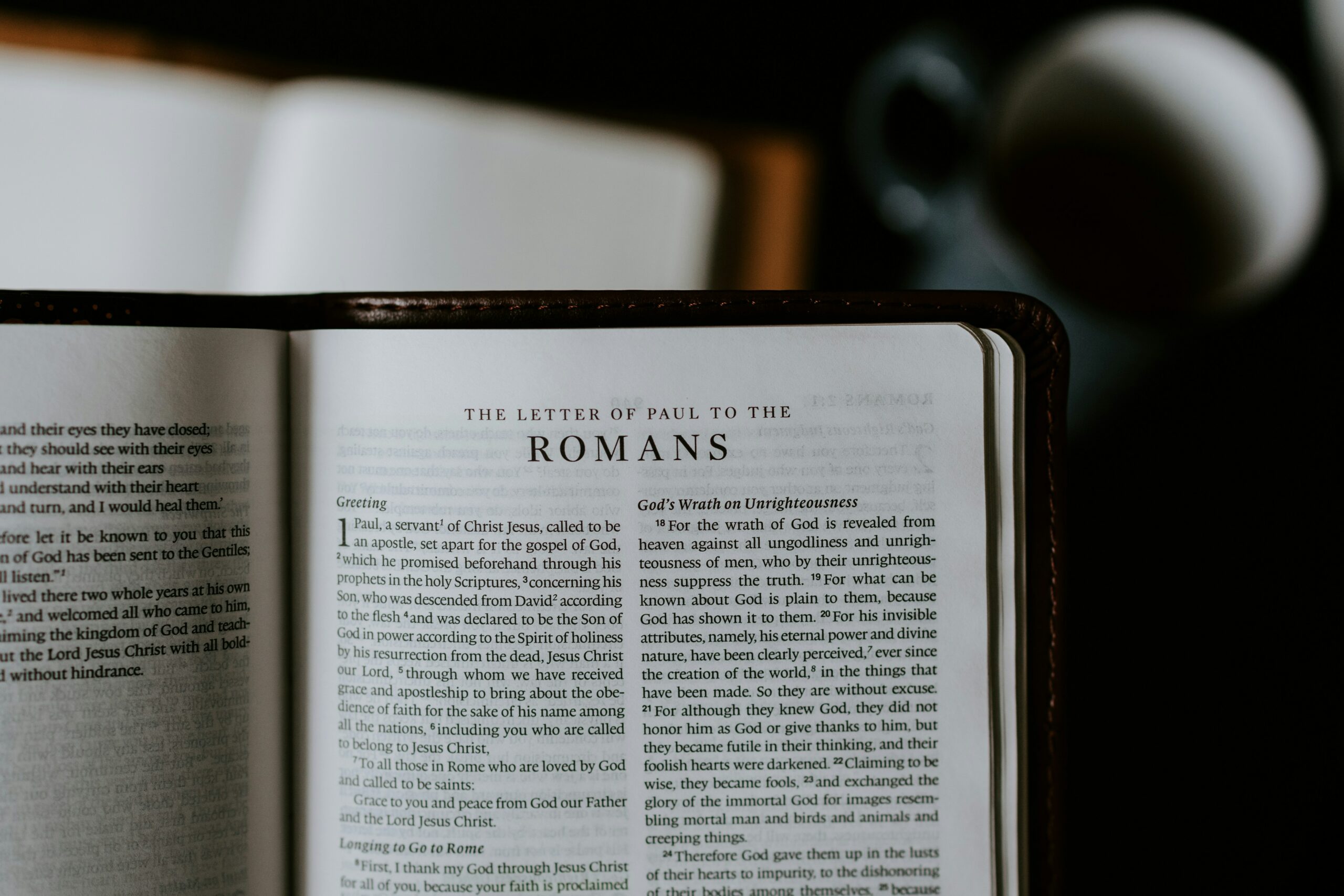
This sermon explores the doctrine of predestination within the context of Romans 8:28-30, emphasizing that God’s sovereign choice is rooted in His eternal foreknowledge rather than human merit or foreseen faith. The teaching clarifies the ‘order of salvation,’ explaining that God’s initiative in calling, justifying, and glorifying believers is entirely grounded in His grace and purpose. It addresses common objections to election by asserting that the ground of God’s choice is found solely in His character and the work of Christ, not in any inherent goodness of the individual. The central message encourages believers to find assurance in the fact that their salvation was planned from eternity past, ultimately pointing to the conformity of believers to the image of Christ and the exaltation of His glory.
Transcript
If you would take your Bibles
and return again, it’s been too long. Return again with me to
the book of Romans to chapter eight. Where we are in the great section
on sanctification, chapters six, seven and eight, where Paul is
focusing particularly on that grace of God. God’s sanctification
of his children. And we have seen already that
all three members of the Godhead are at work. We saw that we are
established in Christ in the first 11 verses. We saw that
we are sustained by the Holy Spirit in verses 12 through 27.
And we are in the midst of considering the fact that we are ordained
by the Heavenly Father in verses 28 through 30. These are rich
and deep thoughts expressed in this passage. We’ll throw ourselves
headlong back into this passage momentarily. I wanted to read
the section in full, beginning in verse 28, if you would. Where Paul writes by way of encouragement,
and we know that God causes all things to work together for good.
To those who love God, to those who are called according to his
purpose, for whom he foreknew, he also predestined to become
conformed to the image of his son, that he might be the first
born among many brethren and whom he predestined. These he
also called and whom he called. These also he justified and whom
he justified. These he also glorified. We’ve spent no little time in
these verses already and just by way of a brief review since
we have been away from these for almost a month. When Paul
says that we know. He wants to draw the believers
attention to the fact that this is no homespun wisdom. We know
in our hearts that God is the one that is causing all things
to work together for the good. We know it. It is a statement. We discovered
happily that is in the Bible that. It isn’t just the homespun
wisdom of our. Grandparents that all things
work together for good. It is a statement of Scripture.
It is a profound and divine truth. That God is the one that is causing
all things. Everything and we saw that the
scope of this is absolutely limitless. God is working all things together
for the good, every difficulty, any situation that we face, any
contingency, any element, anything good or bad, God is able to take
and shape and make it good for good. But we began to see that that
truth isn’t for everyone. It doesn’t match up with the
homespun wisdom of our unbelieving grandparents. It doesn’t match
up with those that want to look out and put a positive spin on
everything taking place of life. And this is the part that the
world neglects to quote. God causes all things to work
together for good. To those who love God. And in
that we saw that there is, in a sense, a problem, a conundrum.
We know our Bibles, we know our Theology, we know our doctrine
that from the beginning of scripture, it is clear that there is no
one who is good. There is no one who really loves
God. No, no one in their natural state
loves God. Something has happened. This sentiment goes beyond just
a feeling of love for God, it is something it is something
profound. It is it is an affection for
God that eclipses anything that we’ve known previously. Something
has happened. We see that Paul tells us precisely
what has occurred in the passage. God causes all things to work
together for the good to those who love him. To those who are
called according to his purpose, God moved. God moved first and
God moved in their lives to woo them to himself. It wasn’t just
an invitation. It was a divine summons and it
was answered. It’s answered every time. So Paul essentially moves. In
verses 29 through 30, to augment or to undergird that statement,
the statement of verse 28 and verses 29 through 30, as they
flow out, essentially are the support.
And he says, let me tell you about divine calling, divine
calling wasn’t even the beginning. Divine calling isn’t even where
it all started. Divine calling is really it falls
really in the middle of God’s plan of salvation. Theologians
have referred to verses 29 through 30 as the order of Salutes, the
Latin term for the order of salvation. How did it happen? Here’s how.
And if you notice, calling is smack dab in the middle. That’s
not where it starts. It doesn’t start with God calling
a sinner. It started in eternity past. And we saw that this list, though
it is excellent, worthy of our study and worthy of our praise,
it doesn’t touch upon every element of salvation. I would say that,
as I pointed out a month ago, regeneration and calling and
faith are rolled into that idea of calling. When God calls us,
he regenerates us. He brings us to life out of death.
When God calls us, he brings us to conviction. We see ourselves
for the first time as the sinners that we are in such desperate
need of a savior. And. Having seen ourselves. In this desperate condition,
we place our faith in the savior who is provided for us, all of
those things are rolled into the idea of calling. There’s
another element of the process of salvation that’s missing,
as we pointed out some time ago, sanctification, and I would put
sanctification smack dab in the middle between justification
and glorification. It’s the process that God takes
us. In imparting piece by piece. That Christ likeness that ultimately
issues forth in glorification. Well, we spent time on those. Not only did God set his love
upon us when he foreknew us, but he also predestined us. Not
only did he predestine us, but he called us. He didn’t leave
us sitting there. He called us. Not only did he call us, he justified
us. Not only does he justify us ultimately,
and as Lloyd-Jones pointed out, he has already, in a sense, glorified
us. He says it in the past tense.
He has already begun the process. You are already marching towards
heaven one day if you are in Christ to be perfected. What a glorious truth. What a
great encouragement. Now, we said when you begin to
hear the word predestination and that’s what we’re going to
touch upon this morning. You say this is an overwhelming doctrine.
This is one from which most people flee. Well. We took Whitfield’s counsel. Whitfield said let a man go to
the primary school of repentance and faith before he goes to the
University of the election of predestination. Unfortunately
in this place they’re all under one building right. And we found
ourselves walking through the corridors of the school and there
are some that are going to be more comfortable in this room
than another. This is where we are. This is
the passage at hand and we must. Duck our heads in to this classroom. We must hear what Paul has to
say. And if it’s a room that we choose
not to spend much more time in that’s OK too. This is not necessary
for salvation as we said several weeks ago. When you begin to
consider the nature of election it’s the nature of election not
the fact of election that really bothers people. Right. I would
say it. almost provocatively that every
Christian believes in election. They just put a different spin
on it. The word is a biblical word. There’s no escaping the
fact it’s very difficult to get away from the idea of believing
in some kind of election if you are a Christian. If you open
the Bible and you hear it said and read. We all believe in election,
but it’s the nature of the doctrine that creates problems for people. It’s the definition of election
that often tends to separate Christians. People will a lot
of times opine about the doctrine on their terms. But as soon as
you begin to introduce the argument that election is unconditional. Things begin to get a little
testy. And as a result most stay away is still clear from the
doctrine of election. One. Pastor said of preachers
a preacher that does not know of this doctrine cannot be expected
to preach it. And there are many that can’t
even begin to approach an understanding of these deep things. And so
why on earth would they preach it. And he that does not thoroughly
believe it will not dare broach it. If you haven’t wrapped your
arms around it and embrace the sovereignty of God in salvation,
then you must not preach it. But there’s a third, and he says
that he whose mind has received it would as soon think of betraying
Jesus with a kiss as not to proclaim it. I think that’s where we are. I think the Lord has laid this
passage before us. Here we are and we must We must
preach it. I remember candidating years
ago in a church, and this doctrine was especially troublesome to
one lady, and she asked me, knowing my position, how often I would
be preaching on the doctrine of election. And I just tried
to graciously answer her no more often than Jesus. And Paul and
Peter and the rest of the Scriptures, it’s there. It’s a biblical doctrine. But we’ve seen that verses 29
and 30 support verse 28. We’ve already begun to look at
the order of salvation. We looked at foreknowledge that
God foreknew a certain people. And we discovered that it was
not this idea, this suggestion that God looked down from the
annals of history, saw who was going to choose him. And because
of that, chose them. That’s silly. What it pointed
to was a divine delight. God took a divine delight. God
set his love upon a certain number of people. As Paul said to the
Ephesians in chapter one, verse four, he chose us in him before
the foundation of the before the foundation of the world.
God foreknew a people. God set his love Upon a people,
as one brother said, the first move in our direction in the
application of God’s plan and purpose of redemption is determined
and controlled by God’s foreknowledge. That’s where it all began. It
didn’t begin with the call. Which ought to encourage us that
if we are the called, if we have placed our faith in Christ, it
didn’t start with the call. It started in eternity past with
God’s foreknowledge. But Paul moves from there. Paul
wants to drive the point home and he comes to this second great
statement in the Ordo Salutis, in the order of salvation, whom
he foreknew he also predestined. There’s our word. I will tell you up front that
whether you use the word election or predestination, Both of those
words essentially highlight the same truth. They both point to
the same thing. The particular word at hand just
means to be defined beforehand, marked out, if you will. Set
apart by God. And as this is the second point
of this five part chain, this foreknowledge that precedes it
just talks about God’s gracious love. God moved in our direction. Predestination, however, nails
it down. What did God move to do? What
did God purpose to do? You might even say it this way,
that God inclined himself to us when you talk about foreknowledge. But when you talk about predestination
he inclined himself to save us. It’s profound. Before the foundation
of the world. God shows certain individuals
to salvation and ultimately he ordains the means by which they
would come to know him. Now the fact that God exercises
his sovereignty in this way shouldn’t be a surprise to us. Do you know
that God speaks of elect angels, that there are angels that were
selected, predetermined by God for a specific purpose? 1 Timothy
5.21, Paul said to Timothy, I solemnly charge you in the presence of
God and of Christ Jesus and of his chosen angels. Now, Paul
doesn’t elaborate there on exactly what the calling and purpose
of these particular angels is, but they have a a specific and
particular purpose. God chose them for them. God
exercised his sovereignty in that regard. God has chosen individuals
for special service. God chose Moses. God chose the
tribal Levi. God chose King David. God chose
the prophets. God chose the apostles. He exercised
his sovereign hand. in those particular areas. To
the praise of the glory of his grace. Not only that, not only
does God choose angels and God choose individuals to service,
but God chose a particular people, didn’t he? In Exodus chapter
6, it says, I will take you for my people. I will be your God
and you shall know that I am the Lord your God who brought
you out from under the burdens of the Egyptians. God chose Israel. And in choosing them, the natural
inclination not only of them, but of us. Is to say, well, there
must have been some human potential. Israel must have been some people.
These must have been the sharpest, wisest, strongest. Most handsome
people ever, right? Deuteronomy chapter 7 clarifies
that for your holy people to the Lord your God, the Lord God
has chosen you to be a people for his own possession out of
all the peoples who are on the face of the earth. Can you imagine
the pride that might well up within you when you heard those
words? The Lord deals with that too. In verse 7, it says the
Lord did not set his love on you or choose you because you
were more in number than any of the peoples. OK, Lord, well,
there goes that. All right, so we weren’t the
most popular. For you were the fewest of all peoples, but because
the Lord loved you and kept the oath which he swore to your forefathers,
the Lord brought you out of a mighty land and brought you out by a
mighty hand and redeemed you from the house of slavery. And as a result, it’s clear it
shouldn’t be a surprise to us that God exercises his sovereignty
in electing individuals. to salvation. John 6.37 All that
the Father gives me will come to me. Acts 13.48 When the Gentiles
heard this, they began rejoicing and glorifying. And as many has
been appointed to eternal life believed. Spurgeon said it in
the way that only Spurgeon can. He painted this picture so vividly
when he said before salvation came into this world, election
marched in the very forefront and it had at its work as its
work for the lodging of salvation. Election went through the world
and marked the houses to which salvation would come and the
hearts which the treasure should be deposited. Election looked
through all the race of man from Adam down to the last and marked
with a sacred stamp those for whom salvation was designed.
God exercised his sovereignty. Now, I told you there were two
essentially similar words that both points to the same truth,
election and predestination, that particular word before us,
predestination, is much easier to narrow down even than election. Because this word is only used
for other times. In the New Testament, Acts 4,
28, 1 Corinthians 2, 7, and twice in the book of Ephesians, chapter
one, would you turn over to Acts chapter four, please? In Acts chapter four, I just
want to show you how it’s used in context. Peter and John are going about
ministering the gospel. They come across their detractors,
the priest, the captain of the temple guard, the Sadducees.
Ultimately, they come before Caiaphas and Annas and all of
those, it says, who were of high priestly descent. They are rebuked. They are commanded not to speak
or teach in the name of Jesus. And they are they utter this
famous line, right? We all know it. Whether it is
right in the sight of God to give heed to you rather than
God, you be the judge. Now, what is a good Jew going
to say? Disobey God? For we cannot stop
speaking about what we have seen and heard. Verse 20. Well. Peter and John and their friends
go out from there and they come back and they begin to report
to their friends what had transpired, how Essentially, God had won
the day God had given them great courage in the face of the authorities
and in the wrong exercise of their authority. And when they
told their friends these things, when they reported all that had
transpired, their friends erupted in a doxology. Look at verse
24. It says that when they heard
this, they lifted their voices to God with one accord. And said,
oh, Lord, it is you who made the heavens and the earth and
the sea and all that is in them, who by the Holy Spirit through
the mouth of our father, David, your servant said, why did the
Gentiles rage and the people’s devise of futile things? The
kings of the earth took their stand. The rulers were gathered
together against the Lord and against his Christ. For truly
in this city they were gathered together against your holy servant
Jesus, whom you anointed, both Herod and Pontius Pilate, along
with the Gentiles and the peoples of Israel, to do whatever your
hand and your purpose predestined to occur.” Did you get that? This didn’t catch God by surprise. Jesus wasn’t lynched. This was
all part of God’s plan, and he predestined it from eternity
past. What a powerful, powerful affirmation of the gospel. The
gospel didn’t just develop. The gospel was planned by God. It was predetermined. It was
predestined from eternity past. Would you turn over to First
Corinthians for the second use of this word? And you’ll see an undergirding
of what was just said. These things didn’t just happen. This is all part of God’s plan
unfolding just as he designed it. Look at verse one of chapter
two, verse one. where Paul says, And when I came
to you, brethren, I did not come with superiority of speech or
of wisdom, proclaiming to you the testimony of God, for I determined
to know nothing among you except Jesus Christ and Him crucified.
I was with you in weakness and in fear and in much trembling,
and my message and my preaching were not in persuasive words
of wisdom, but in demonstration of the spirit and of power so
that your faith would not rest on the wisdom of men, but on
the power of God. Boy, these are words that we
could not only study, but implement in our own day and age, right?
Yet we do speak a wisdom among those who are mature, a wisdom,
however, not of this age. What is Paul beginning to say?
This gospel that we bring you, this approach to ministry, this
If we say, should we say method and motivation in ministry? This gospel that we bring, these
motives that we bear. Are not of this age. Nor of the rulers of this age,
nobody taught this to us, nobody living. who are passing away,
but we speak God’s wisdom in a mystery, the hidden wisdom
which God predestined before the ages to our glory. We have the gospel that God thought
up. We have the methods of ministry
that God ordained. The wisdom, he goes on to say,
which none of the rulers of this age has understood. It’s all
by God’s grace. It’s all by virtue of the Holy
Spirit that any come to know these things. What does predestined mean? It
means that God thought it up in eternity past and God is implementing
it in time. And that’s exactly the same word
that he uses in this context. If you would, one last passage
and briefly Ephesians, chapter one. Where Paul uses it twice, but
I want to show you how he uses it. Imagine Paul. I don’t know if you’ve ever seen
a Puritan desk. The Puritans, a lot of times, used to stand,
and they would stand at a tall desk, not unlike this, but wide,
where you could lay out all kinds of books, where your wife wouldn’t
come up and close up the books when she was cleaning up your
room. All kinds of books laid out on the desk. It’s happened
once. And so the Puritans would stand
at this desk and this is where they would do their writing,
right? And they would have an inkwell and they would have a
pen and they would do that’s where they would do their labor
is at the Puritan desk. They called it because it was
upright standing. No wonder they didn’t have back
issues. What Paul does here is he begins to advance a thought
and then he takes a breath, as it were, and as it were, dips
his pen back in the ink. And when he does, he uses completely
different terminology. Start with me in verse three,
blessed be the God and father of our Lord Jesus Christ, who
has blessed us with every spiritual blessing in the heavenly places
in Christ. Well, like what Paul and Paul
will begin to enumerate all of those blessings, number one,
just as he chose us in him before the foundation of the world,
that we should be holy and blameless before him. Paul pauses. dipped his pen in the inkwell
and comes back to the paper and says, in love, he predestined
us. It’s the same thought. It’s a
parallel thought. It’s essentially the same thing
that he’s already been saying. In love, he predestined us to
adoption as sons through Jesus Christ to himself. It wasn’t
at all because God looked down the annals of history and saw
something good in any of us. It wasn’t that he knew that we
would believe the gospel that he selected us. The reason was
is to be found in God’s own character. It was all of God. And so when
Paul recharges there and undergirds the statement on The fact that
God had chosen us, Paul points back to eternity past with this
familiar little word to us now and says that God predestined
it. God moved first. Following on the heels of his
love, which he had set upon us and that foreknowledge. God moved
to purpose that and specify that love with regards to salvation. As one pastor said in all of
the cases. In which this word predestination
is spoken of the idea is distinctly recognized that the ground of
the choice which it implies is not in us. Did you get that when
God shows you it wasn’t because of you. It wasn’t because of
your family tree. It wasn’t because of how wise
you are. It wasn’t because of your abilities
to unfold the deep truths of Scripture. It wasn’t because
of any of that. It goes on to say that we are
chosen in Christ according to the free purpose of God. After all, it was from eternity
past that God chose you. When it says that God predestined
us, in all of these passages it points to that character of
God. It points to the fact that we’ve
been brought to God and brought into union with Him through Christ for a specific purpose. We’ll
come to that purpose in a moment. But it’s God who moved first.
Now, obviously, there are many strong objections to this doctrine,
and I’m not going to either address every one of them today, nor
am I going to elaborate all of them. But some have said that
this makes God to be terrifically unfair. This predestination,
I don’t it has a bad taste in my mouth. Pastor, I don’t like
this. Let’s move on. The amazing thing to be noted
is not that God did not save all people ever born on the face
of the earth. The amazing thing is that God
saved any. One pastor said the marvel of
marvels is not that God is in his infinite love and justice
has not chosen all of the guilty race to be saved but that he
has chosen any. Others have criticized this doctrine
by saying that God chose us. Because of us, it was because
of something in me God saw potential. And you hear this all the time,
don’t you, people? We hear it all the time. Position laid out in Ephesians
4 obliterates that idea. Listen to this. There’s at least
five, if not six reasons that are laid out there explicitly
in Ephesians 4 That poke all kinds of holes in this idea that
God chose me because of me. Flip back to Ephesians 4 just
briefly, I shouldn’t have had to should have had to tuck something
in there. God didn’t choose you because
of you, God chose you in him that is in the Lord Jesus Christ.
Remember, we talked about in Romans a couple of weeks ago
that we are in this sphere. We are in the sphere of Christ
now. And all things, all good things are in the sphere of Christ.
Our sanctification is there, our justification, our forgiveness,
our giftedness. Everything that we have now is
in because of the fact that we reside in the sphere of Christ.
God shows us in him, in the Lord Jesus Christ. God shows us before
the foundation of the world. Well, that kind of pokes holes
in the theory that God looked and saw what he had in me. In
fact, Spurgeon clarified it so well that God must have chosen
me before I came into the world, because he certainly would not
have done so afterward. That pretty much clarifies it,
doesn’t it? As soon as God saw what you were like. God chose us in him before the
foundation of the world, not because you were holy and blameless
before him. So that you would be holy and
blameless before him. Remember, I said that Paul recharges,
he dips his pen in the well, he comes out with a completely
different term, but it means exactly the same thing. He predestined
us to what? To adoption as sons, which means
we weren’t part of the family to begin with. God didn’t look
on us and say, there’s my beloved son. He predestined us to adoption
as sons through Jesus Christ to himself. And get this, what
motivated God to do this then? According to the kind intention
of his will, that ends the argument, doesn’t it? It must was nothing
in me, nothing in you. Others have said of this doctrine
that. God chooses those who choose him. If you choose me, I’ll choose
you kind of a thing sounds like we’re playing pickup basketball,
doesn’t it? The problem with that particular view is it essentially
makes man. Sovereign. over God that if only
we will choose God then God will choose us. Perhaps the most absurd at least
to me personally the most absurd criticism of the doctrine of
election or predestination is that it eradicates our motivation
to evangelism. It pictures people sitting back
saying well if everybody you know God’s already predestined
it doesn’t matter what I do right. That’s the argument. Well you’ve
heard that one too. No. There’s nothing to this one,
because the fact that we know we know of a certainty that there
are those out there, we don’t know who they are. And that’s
why we have to use the shotgun approach, we talk to everybody,
talk to everybody that we can. We know that there are those
out there who God has set his love upon and to whom he has
commanded us to proclaim in all faithfulness. the gospel of our
Lord Jesus Christ that ought to motivate us. If you were in
sales and God said, look, here’s your job. Your boss says, look,
all I needed to sell is is two of these a year. Well, that’s
easy. And you go door to door and you
knock on doors until you sell to, you know, that there are
people out there because God has told you, you know, that
there are people that is marked out from eternity past for salvation.
You don’t know who they are, just like you don’t know whose
door is going to open up to your excellent sales pitch as a salesman,
right? You just be faithful. Paul’s
not done. Paul says, look. God moved first,
God set his love upon us and he set it upon us for a specific
purpose that we would be conformed to the image of his son. That’s
the initial purpose. That essentially mirrors the
idea of glorification to which we talked. We will talk about
more fully. We’ve spoken about it briefly.
Essentially, there’s there’s a dual purpose here in this particular
verse verse twenty nine. God said his love he predestined
us for salvation for a specific purpose. Now, some have said
that this pokes a hole in the idea of salvation. They said,
no, God didn’t predestine us for salvation. He predestined
us to become conformed to the image of his son. Oh, really? What is it that we lack? Before
we come to Christ, what is it that we lack in our natural state,
we lack the conformity to the image of the sun when it says
that that’s the specific purpose that God has designed. In predestining
us, he’s pointing specifically to salvation, this word conformity,
this it means that God is doing the work. It means that God is
slowly molding us and forming us and will complete the work
as we talk. We’ll talk about in glorification.
He will finish the work. Conformed to the image of his
son. It points out. That we will one
day be conformed to Christ. We will be like him. We spoke
of that several weeks ago that our final glorification is this
full conformity to the image of Christ glorified. It’s the
glorified Christ. That we will mirror. If. As we talked about earlier. Equally important works. Like
the Holy Spirit’s work in the divine work of salvation, regeneration,
conviction of faith, if they’re all covered, as I suggested to
you under the idea of calling, then here it is perfectly reasonable. To put the spirit’s work of sanctification
under the greater work of glorification. Paul just alludes to it here.
He says, look, you have been selected out from eternity past
for a specific purpose. That you one day would. In a
way that God only can define that you will be like Christ.
That you will. Echo. His nature. Philippians 321 Paul said it
in almost equally mysterious terms, he will transform the
body of our humble state into conformity with the body of his
glory by the exertion of the power that he has, even to subject
all things to himself. God is going to win the day.
But Paul closes with the ultimate purpose, what is the ultimate
purpose of our predestination, this word that for many of us
When we walked in was somewhat distasteful. And now we find
it to be our very salvation tied to this great concept. For whom
he foreknew. He also predestined to become
conformed to the image of his son, why? That he that is Christ
Jesus himself might be the first born among many brethren. Let’s
pause for just a moment, what does it mean by this idea of
firstborn? The firstborn, especially in
Hebrew culture, was always a position of preeminence. We essentially
want to exalt our Lord and Savior, don’t we? And all that we do,
well, he will be exalted. And he’s going to be exalted
by the virtue of the fact that he comes first. But in his train
comes the great host of believers that follow those whom God has
set his love upon. In the Hebrew culture, the first
born male child had this privileged status. But for Christ, Christ
has reached a preeminence that now eclipses anything. Of an
earthly stature. The ultimate purpose. Of predestination is the glory
of the Son of God. The preeminence of our Lord Jesus
Christ. One pastor said it this way,
it is not merely an unintended result, but it is the great and
contemplated and in the predestination of God’s people. In the glory
and exaltation of Christ, the purpose of God in the salvation
of men was not mainly that men should be holy and happy. But
that through their holiness and through their happiness, his
glory in the person of the sun should be displayed for all eternity. As we prepare our hearts for
the Lord’s table, would you bow in rejoicing before God for the
blessings and benefits of the fact that you, if you are in
Christ, God predestined you from eternity past. Would you bow
with me? O merciful King, as we prepare
to come to your Lord’s table, where we can pause and confess
our sins, but where we can also rejoice And Father, we can rejoice
because your plan from eternity past was to send Christ to be
our Savior. And your plan from eternity past
was to proclaim a gospel. And it was to proclaim a gospel
to a people. To proclaim a gospel about a
Savior you had sent to a people you had predestined that would
one day look like Him, spiritually speaking. Father, we are humbled
by this. We know it had nothing to do
with us. Lord, and even as we meditate
upon these things, it gives us heart to pursue you the more
for holiness. It causes our heart to overwhelm
with joy in the fact that you, out of all the people in the
world, chose us. We rejoice, Father, that you,
through this truth, gain all the glory and that Christ gains
all the preeminence. Lord, we humble ourselves before
you in the acknowledgement of this
truth as we come to celebrate the Lord’s table. It’s in Jesus’
name that we pray, Amen.
Messages: 204