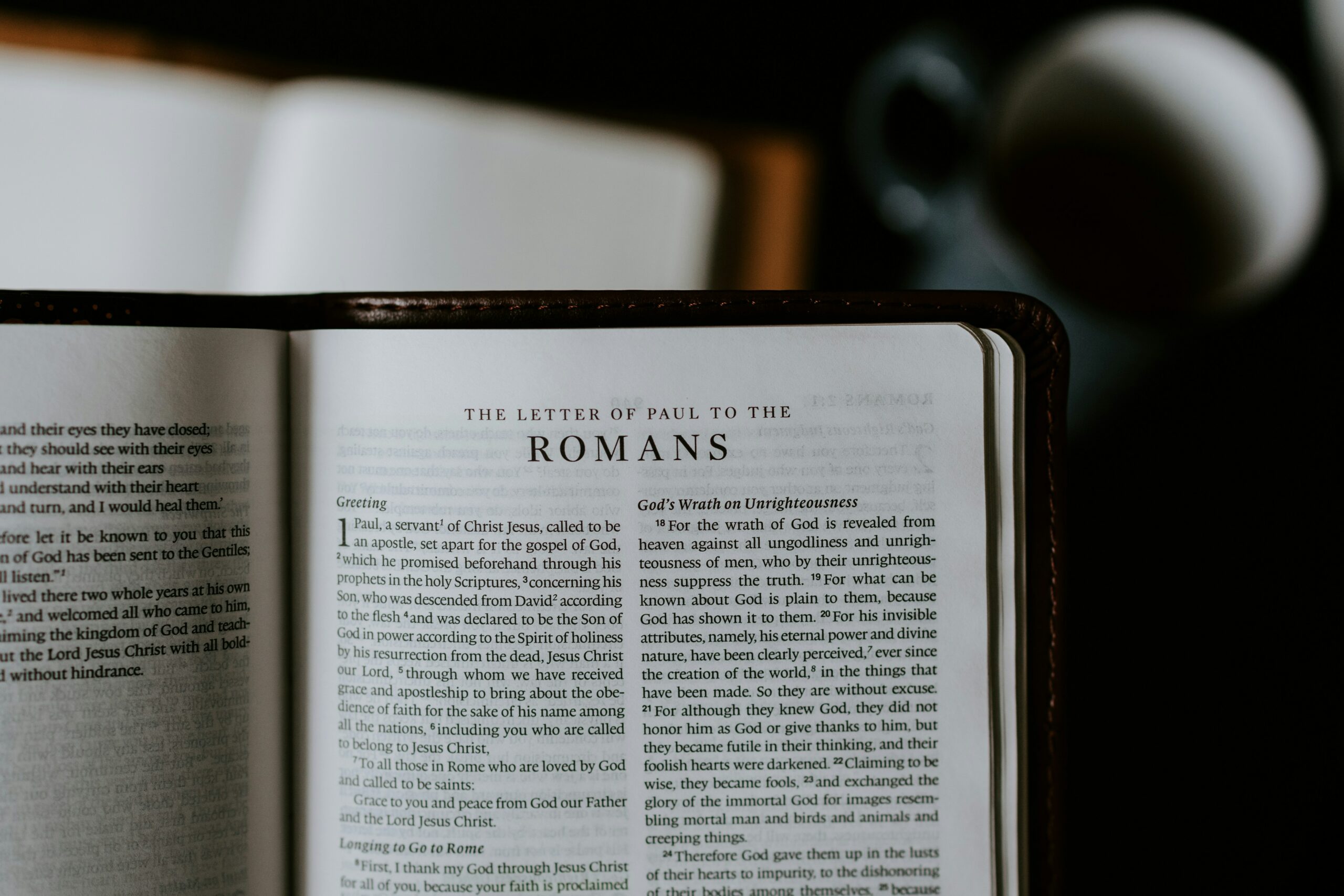
Sovereign Mercy
This sermon examines Paul’s defense of God’s sovereignty and mercy in Romans 9, arguing that divine election is not based on human will or effort but solely on God’s sovereign choice. The message asserts that mercy is a free gift that cannot be earned or deserved, challenging the notion that God’s selective salvation is unjust. By using the illustration of the potter and the clay, the text emphasizes the humility required when confronting God’s authority over human destiny. It further explains that God’s patience with sinners serves to highlight the riches of His glory in the saved, drawing from prophetic writings in Hosea and Isaiah. The sermon concludes by applying this doctrine to the believer’s life, reminding the audience that salvation is entirely a work of grace for those who were once dead in sin.
Transcript
Last Lord’s Day, we entered into this new section of the letter of Paul to the Romans, chapters nine through 11, the theme of which is God’s sovereignty, sovereignty over not just individuals, but over entire nations. And that is the fourth S in our outline, sin, salvation, sanctification, and sovereignty.
Now last week, if you were here, we did an overview of this entire section. It was a miracle. Three chapters we covered. And we did that in order to enable us to tackle portions, highlights, to delve more deeply into some of the high points of these chapters today and in the weeks to come. In our consideration of these three chapters, we saw last week that Paul is addressing the subject of God’s sovereignty, not so much over individuals, but his sovereignty over entire nations. Now, no doubt about it.
God is sovereign over the nations and every individual as well, but Paul reduces his discussion essentially to two nations. Israel, God’s chosen people, and the Gentiles, very generally referring to all those people groups that are not chosen, that are not Israel. God is sovereign over both of those nations, Israel and the Gentiles.
And it’s a challenging but a grand and important section before us, indeed, within the entire New Testament and Scripture itself. And as difficult as the overall subject matter is, God’s sovereignty over the nations, we were able to not only grasp the overall thrust of these chapters last week, but we were also able to break down into manageable portions of these chapters.
I suggested to you last week that Paul presents three distinct observations in these chapters. In 9, 1 through 29, We saw that a nation’s rejection, namely Israel, a nation’s rejection does not upset God’s plans. In 930 through 1021, we noted that a nation’s dullness, namely Israel, a nation’s dullness does not thwart God’s salvation. And then in 11.1 through 36, a nation’s purposes, not only Israel’s, but also the Gentiles, a nation’s purposes are for God’s glory, not their own. And within each of those three separate sections, Paul, as we saw, gives three points. Three sets of three, as we began to note last week. Now, last week we observed that in the opening verses of chapter 9, verses 1 through 5, Paul shares his personal grief about his own people, that is, Israel’s rejection of the Messiah. They are his kinsmen, according to the flesh, and yet they have largely rejected the Savior that he knows and loves, and that has brought him immeasurable pain.
That doesn’t mean that every single Jewish person rejected Christ, Paul himself, as well as all of the apostles, and most of the early disciples were of Jewish descent. But sadly, for the most part, the greater portion of Israel spurned Jesus and his message of salvation. But not even the rejection of God’s son by the chosen people could upend God’s plan of redemption. God will save souls. Jesus Christ as Savior was sent first to the Jews, but not exclusively so. He was sent to the Gentiles, the heathen nations as well. So a nation’s rejection of the Messiah does not upset God’s plans at all.
The second point that Paul addresses in the opening chapter, verses 6 through 13, is that Israel’s rejection and God’s sovereignty. Is God really sovereign? Is God really in control of all things pertaining to people and nations? If his own people even rejected his son, the savior that he had sent, wouldn’t that undermine the idea of God’s supremacy?
It’s a logical question, but the rejection of the Jewish people of God’s son does not nullify the integrity of God or his purposes. It is not as though, Paul says, it is not as though the word of God has failed. Israel’s blasphemous rejection of Christ presents no challenge to God whatsoever.
God never intended or promised that every Jewish person ever born would be eternally saved. He never promised that. Not all Israel, Paul explains, are genuinely Abraham’s descendants. Not all of even Abraham’s descendants were children of the promise. And so not every Israelite was destined for eternal salvation. Physical descent did not guarantee that someone would be saved, but God’s plan of redemption of sinners is still intact. God will save sinners.
God does indeed even have a purpose in Israel’s rejection of the Savior, which he presents in verses 14 through 29. So this morning I want to draw our focus to those verses, Paul’s third point in his first section. Chapter 9, verses 14 through 29, which tells us that a nation’s rejection does not upset God’s plans. If you would, follow along with me as I take these verses before us. What should we say then?
There is no injustice with God, is there? May it never be, for he says to Moses, I will have mercy on whom I have mercy, and I will have compassion on whom I have compassion. So then it does not depend on the man who wills or the man who runs, but on God who has mercy. For the scripture says to Pharaoh, for this very purpose I raised you up to demonstrate my power in you. and that my name might be proclaimed throughout the whole earth.
So then, he has mercy on whom he desires, and he hardens whom he desires. You will say to me then, why does he still find fault? For who resists his will? On the contrary, who are you, oh man, who answers back to God? The thing molded will not say to the molder, why did you make me like this? Will it? Or does not the potter have a right over the clay to make from the same lump one vessel for honorable use and another for common use?
What if God Although willing to demonstrate his wrath and to make his power known, endured with much patience, vessels of wrath prepared for destruction. And he did so in order that he might make known the riches of his glory upon vessels of mercy, which he prepared beforehand for glory.
Even us, whom he also called not from among the Jews only, but also from among the Gentiles. As he says also in Hosea, I will call those who were not my people, my people, and her who was not beloved, beloved. And it shall be that in the place where it was said to them, you are not my people, there they shall be called sons of the living God. And Isaiah cries out concerning Israel, though the number of the sons of Israel is as the sand of the sea, it is the remnant that will be saved, for the Lord will execute his word upon the earth thoroughly and quickly. And just as Isaiah foretold, except the Lord of the Sabbath had left to us a posterity, we would be as Sodom. We would be as, we would have resembled Gomorrah. For our consideration this morning in these verses, I’d like to go back to these verses and to look at Israel’s standing and God’s mercy Mercy, specifically God’s mercy, is the overarching theme of these verses.
And the first thing that I would say about mercy is that it cannot be earned or deserved. That’s the very nature of mercy. Mercy is God’s withholding of his justifiable wrath. And in that sense, we all deserve his wrath. An act of mercy can only originate within God himself. It is a free and sovereign act of God. God sees people languishing under the misery of sin, and though they deserve so much worse than suffering, he moves to relieve their suffering. And so mercy is not only an expression of God’s kindness, but it is a withholding of his just wrath. God owes no one his mercy. Mercy by its very definition is not shown to all. It is God’s prerogative to extend or withhold mercy.
And we have to keep these clarifying thoughts in mind as we ponder God’s mercy towards individuals and nations in these verses before us. If I may, let me provide some structure to this overall section, verses 14 through 29. The first we see is God’s proclamation of mercy in verses 14 and 15, God’s application of mercy in verses 16 and 17, a defense of God’s mercy in verses 18 through 21, and then finally, the implications of God’s mercy in 22 through 29. Let’s go back to the beginning, if we could, to verse 14. We’re looking at Israel’s standing and God’s mercy.
And first, Paul proclaims this mercy. Look at verse 14. What should we say then? There is no injustice with God, is there? Having dealt with this potential challenge in verses 13 through 16, Paul perceives that there is yet another potential challenge on the horizon. And he moves to address that here, beginning in verse 14. Is God’s sovereignty capricious? Is it unfair? Is the exercise of his mercy unjust? Paul initiates this discussion with another rhetorical question. There is no injustice with God, is there?
We noted this last week that God’s critics frequently cite and level this accusation against him. That he unfairly favors one person or one nation over others. That his love and justice are capricious, unpredictable. That God’s sovereignty is simply favoritism. And that makes God unjust.
May it never be, Paul asserts, and he proceeds to show that the spiritual standing of every person and every nation is only according to God’s sovereignly dispensed mercy. Paul establishes his argument for God’s sovereign mercy with words that God actually uttered to Moses.
I will have mercy on whom I have mercy. I will have compassion on whom I have compassion. It’s God’s prerogative. Those words are from Exodus 33, 18. Compassion there, pointing to the sentiment that is generated by observing others who are suffering. We have compassion. Mercy is the effort that is expended to relieve the cause of suffering. And God here just steps back and articulates the whole process. And that he is sovereign over both of those elements, compassion and mercy.
You see there in Exodus, 33, Moses was appealing to God that God would manifest His glory to the entire people of Israel, all of the people of Israel. That if they could only get a glimpse of God’s glory, they would all be converted and follow God. But God’s gentle rebuke of Moses declares that his glory and his salvation were not for every Israelite.
And the salvation of God is not unfair in the exercise of his mercy. It is itself an expression of God’s sovereignty. No person, no nation deserves God’s saving mercy. It is bound entirely in God’s gracious choice. You see, mercy is not mercy if it’s shown indiscriminately to all. According to his will and purpose, God does discriminate to whom he shows mercy, whether to individuals or to entire nations. And so Paul is setting forth here a biblical perspective of God’s mercy. And the first thing that he does is to proclaim that such mercy exists. That God is a God of mercy. But it’s not given to all. It’s not extended indiscriminately.
And in verses 16 and 17, Paul makes application of such mercy. Would you look at verses 16 through 18? where Paul says, so then it does not depend on the man who wills or the man who runs, but on God who has mercy. The scripture says to Pharaoh, for this very purpose I raised you up to demonstrate my power in you and that my name might be proclaimed throughout the whole earth. So then he has mercy on whom he desires and he hardens whom he desires. We can be sure that Paul is applying the idea of God’s mercy by these transitional words, so then. He’s taking what he said in verses 14 and 15 and applying them. Paul is drawing a conclusion here. He’s making application of this important thought of God’s sovereign mercy.
And the conclusion that he comes to is that God’s exercise of mercy does not depend on the man who wills or on the man who runs. It depends on God and God alone. When he says that God’s mercy is independent of man’s will, he points to the fact that mercy cannot be demanded by human desire as such. A person or an entire nation may desire God’s mercy, but that does not compel God to grant it. A condemned prisoner may plead for clemency or leniency, but a judge is not constrained to grant it.
When Paul refers here to the man who runs, it clearly points to the idea of human effort. The illustration of a foot race would have been easily understood by his Roman readers. Foot races of all kind were common in the stadium games in Rome. Here, Paul uses this image to suggest the efforts that we expend towards doing right, towards living right. in our attempt to advance our personal righteousness, to catch God’s attention so that he might show us mercy. All of this kind of thing, Paul thinks of as hopeless works righteousness. It doesn’t work. It can never secure God’s mercy or salvation. And so mercy is not contingent on how much we desire it or how much we work for it. It is completely dependent upon God himself. God’s mercy does not depend on those things.
And Paul supports this very strong assertion by citing that God’s dealings with Pharaoh in Moses’ day. Look at this. He cites Exodus 9-16, where God sends a message to Pharaoh by means of his witness, Moses. The message comes in the midst of the 10 plagues. I think six had already taken place. And what he’s doing is trying to induce Pharaoh, as the 10 plagues were, into releasing God’s people. Moses here explains to Pharaoh, in essence, that he is a mere pawn in God’s hand.
His existence and his activities are entirely under God’s sovereign control. Paul quotes there Exodus 9, 16, which says, for this very purpose, I raised you up. to demonstrate my power in you and that my name might be proclaimed throughout the whole earth. God had a plan for Pharaoh and God is executing that plan through him. Basically, Pharaoh was nothing and could do nothing outside of God’s divine purposes.
Even at the moment God addresses him, he is only alive in order to fulfill God’s purposes. God, Daniel 221 says, is the one who removes kings and establishes kings. Paul says essentially the same thing using different terminology in Romans 13. He says that governing authorities are established by God.
Pharaoh was where he was by God’s sovereign design. God installed him as a ruler for the very purpose of challenging Moses, challenging God’s people, and even challenging God himself. That was God’s design with Pharaoh so that God could manifest his power and glory so as to make his name known. Pharaoh served a purpose.
Paul draws the unmistakable conclusion from the very account of God’s dealings with Pharaoh and in the Exodus that God hardened Pharaoh’s heart. He made him stubbornly inflexible. The hardening of a sinner’s heart is God’s judgment. punishment for sin that essentially gives the person over to their sinful desires. Pharaoh was only too willing to dig his heels in and to fight against Moses and the people of God and God himself. And so God gave Pharaoh over to his sinful inclinations.
The Exodus account of God’s dealings with Pharaoh presents a back and forth between Pharaoh hardening his heart and God hardening Pharaoh’s heart. Both things were true. God hardened Pharaoh’s heart because Pharaoh hardened his own heart. The clear implication is that while God could have extended his mercy toward Pharaoh, He didn’t.
Choosing instead to use him to fulfill God’s plan by hardening his heart. This entire section, Paul says, is according to God’s will and purpose. He has mercy on whom he desires and he hardens whom he desires. The only factor involved with either mercy or hardening is God’s sovereign will. It’s the same thing that he communicated to Moses. As mentioned in verse 15, either his mercy or his compassion are in his sovereign will. That leads us to a third observation here, not only the proclamation of God’s mercy and the application of God’s mercy, but the defense of God’s mercy. And I think we could all, we’re uncomfortable enough that we could say, yeah, we’d like a defense of this kind of mercy.
Verse 19, you will say to me then, why does he still find fault? For who resists his will? If God is sovereign and God declares a purpose for an individual, why would God find fault with that individual? That’s the argument. God’s sovereign exercise of both mercy and hardening is what brings up this additional challenge to God’s character. If those things are bound up in the sovereign will of God, how then does God still find fault? If God has made up his mind and begun to exercise his will, who could possibly resist it?
The suggestion again is that God would be unjust to judge someone whom he had hardened. In the exercise of mercy, pardon me, if the exercise of mercy is entirely under God’s will, if we are but instruments in God’s hands, how can even God hold such people accountable as he did to Pharaoh?
To this question, Paul issues a stern rebuke, verse 20. On the contrary, he says, who are you, O man, who answers back to God? This reminds us immediately of the rebuke that God gave to Job, doesn’t it? Who is this that darkens counsel with words without knowledge? Where were you when I laid the foundations of the earth? And God proceeds to pepper Job with a series of humbling questions.
That’s the nature of this question. God’s ways and purposes are not subject to man’s scrutiny. It’s utter blasphemy to think that we could have the nerve to question an omniscient, omnipotent, and all-powerful God. Better for us to cover our mouths and humble ourselves in silence before him. I love the second line of verse 20.
The thing molded will not say to the molder, why did you make me like this? Will it? Paul doesn’t even dignify the creation here, whatever or whoever it is. He doesn’t even dignify them with a personality. He calls it a thing. Is this thing really going to challenge the very one who made it? Can we imagine for a moment, say, a fig tree contending with God about why it wasn’t made into an apple tree? That alone would be absurd, ridiculous. And so it is for a person to challenge God, it’s arrogant and blasphemous. And Paul quickly inserts a fitting illustration into verse 21. It’s the very familiar illustration of the potter and the clay. Or does not the potter have a right over the clay?
To make from the same lump one vessel for honorable use and another for common use? It’s a recurring illustration throughout Isaiah’s prophecy. Listen to this. Isaiah 29, 16. Shall the potter be considered as equal with the clay? That what is made would say to its maker, he did not make me. Isaiah 45, 9. Woe to the one who quarrels with his maker, an earthenware vessel among the vessels of the earth. Will the clay say to the potter, what are you doing? Isaiah 64, 8.
Oh Lord, you are our father. We are the clay. You are our potter. All of us are the work of your hand, stated there positively. God doesn’t owe anyone an explanation about anything. He is the potter. He is almighty God, and we are the clay. and the distance between the clay and the one formed it cannot be measured. Here’s the illustration in short.
The potter takes a lump of clay and he spins it and forms it according to his own desire. He puts it into the kiln to harden it and dry, and he extracts his piece from the oven Suddenly the piece begins chirping and complaining. Why did you make me like this? Why did you make me into an ordinary mixing bowl? I wanted to be a fancy platter to be placed on the table at a festive dinner. That aptly captures the ridiculous idea before us. as humans, challenging God over the decisions and choices that He has made. He’s the creator. He’s the potter. We are the clay in His sovereign hands.
So what does this mean? That God is justified in the sovereign exercise of His mercy? What are the implications of this doctrine? Paul addresses that question last, beginning in verse 22, the implications of God’s mercy. Paul starts it this way, what if, what if God, although willing to demonstrate his wrath and make his power known, endured with much patience vessels of wrath prepared for destruction? And he did so in order that he might make known the riches of his glory upon vessels of mercy. which he prepared beforehand for glory. Even us, whom he also called not from among the Jews only, but also from among the Gentiles. As I said, Paul wants here to address the implications of his sovereign mercy. And we gather this actually from verse 23, in order that, But to begin with, Paul asks a very provocative question, doesn’t he?
What if, what if God endured vessels of wrath prepared for destruction? Now, in our home, when the kids were little, we had a rule, we didn’t deal with what if questions. We’re not God, but since Paul does here, so will we. What Paul pictures by this question is God bearing with, allowing sinful men and patiently bearing with them as they continue in their sin. Because it raises the question. God has already determined whom he will or will not show mercy. Why not end it all right here? Why not bring this whole thing to a conclusion? And embedded in his question are hints toward the answer. God is willing to make his power known. He’s not afraid to be God.
But he’s also willing to exercise his patience, much patience, by enduring vessels of wrath who are prepared ultimately for destruction. When Paul refers to them as vessels of wrath, he points to their ultimate end, who will receive God’s full measure of punishment for sin. What if What if God chooses to bear with their sinfulness and their blasphemy, their ungodliness for a season? There’s nothing unjust about God exhibiting his mercy. There’s nothing unreasonable about the fact that that opens him up to some kind of scrutiny by his creation. If God were to do this, he must have a purpose, right?
And Paul unfolds that purpose to us right there in verse 23. God endures these vessels of wrath, sinful creation, in order that he might make known the riches of his glory upon vessels of mercy. This identifier, vessels of mercy, refers to those who will ultimately be saved by the act of God’s mercy. And so Paul’s intention here in bearing with vessels of wrath is to extend his grace to vessels of mercy. God wants them to know how great the value of his mercy is. He wants you and I to understand how great of a gift mercy is.
God, lest there be any doubt to whom he refers to there, Paul says in verse 24, that even us, whom he called not from among the Jews only, but also from among the Gentiles. And he rolls up the teaching of the previous chapter regarding God’s election and ultimate calling of believers, and he blends it here with the sovereign purposes of God, saving both Jews and Gentiles. Paul tells us here in these verses that God has a purpose to reveal his glory in the salvation of souls, Jews and Gentiles, and he presents God as being God, exercising his sovereign mercy. And he highlights that in closing with three illustrations from God’s Old Testament prophets. First of all, he illustrates it in verses 25 and 26 with an illustration from Hosea, which book our brother is preaching through.
Look at verse 25, as he also says in Hosea, I will call those who were not my people, my people. And her who was not beloved, beloved. And it shall be in that place where it was said to them, you are not my people. There they shall be called sons of the living God.
As we heard last week, this is taken from Hosea, who in the context refers to the nation of Israel. But here, under the inspiration of the Holy Spirit, Paul employs these same verses to include the Gentile nations. Those who were once not my people and not beloved are in time by God’s mercy called my people and beloved. The change is explainable only because of God’s mercy. They didn’t earn it, they didn’t deserve it. Both nations will be saved only by God’s mercy and called sons of the living God, his own children.
He illustrates it as well from Isaiah chapter 10. This tells us not only the element of mercy, but the element of the remnant. Look at verse 27. Isaiah cries out concerning Israel, though the number of the sons of Israel is as the sand of the sea, it is the remnant that will be saved, for the Lord will execute his word upon the earth thoroughly and quickly. Paul’s second illustration here of God’s sovereign mercy is drafted from Isaiah chapter 10, as I said. And whereas the previous illustration seems to expand the coverage of God’s mercy, to include the Gentiles, here the coverage is drawn in. It’s contracted to minimize so as to cover only a portion that is a remnant of God’s nation Israel.
Listen to Isaiah’s statement as Paul cites it in verses 27 and 28. Addressing Abraham. God employed this same image to refer to the plentitude of God’s people, remember? As the sand which is on the seashore. And God employed the number of stars in the heavens to communicate the same thing. Abraham’s heritage would be innumerable.
But that never meant that every Jewish person ever born would be saved. And so here Paul dramatically limits the number of those who are going to be saved. Only the remnant, he says, they too would be saved only by God’s sovereign mercy. The third and final illustration of God’s mercy drawn from Isaiah chapter one tells of the severity of God’s mercy.
Verse 29, just as Isaiah foretold, except the Lord of Sabaoth had left us to a posterity, we would have become as Sodom, we would have resembled Gomorrah. Did you get that? He wants them to know the severity of his mercy, how close they were to eternal perdition. And the verse exhibits the fact that such mercy is utterly undeserved. Those saved are no better than those who were ultimately lost. As sinners, God plucks us out of that sea of sin.
Isaiah says that this is due to the Lord of Sabaoth. The word there could be translated hosts or armies, even as our psalm said today, Lord of hosts. It is the Lord of hosts who bestows a blessing of salvation upon a portion of the nation of Israel. He left to us a posterity, he says.
It was nothing earned or secured by God’s people. Rather, it was a gift of God’s mercy alone. Isaiah communicates the severity of this gift when he mentions Sodom and Gomorrah. wiped off the face of the earth because of their wretched sin. And indeed, Israel and the Gentile nations as well deserved no better than the destruction of these sinful nations. Could you and I not say amen to that? Did we deserve any better? No. And if it were not due, to God’s undeserved mercy, the Gentiles and Israel would have suffered the same exact fate of Sodom and Gomorrah.
And so as Paul has presented, even though Israel largely rejected the Messiah, God maintains his sovereignty there, not only by saving those from the Gentile nations, but even by saving a portion of Israel. In closing, would God’s people turn to Ephesians chapter two? I want to make this practical for us. Ephesians chapter two.
And verse one. And you were dead. in your trespasses and sins. We deserve no more, no better than what Sodom and Gomorrah earned by their sinful behavior. That’s what we deserve. That’s the severity of which Paul speaks here. You were dead in your trespasses and sins in which you formerly walked according to the course of this world, according to the prince of the power of the air.
And sadly, some people might say, yes, but I have reformed myself. I pulled myself together. I repented of my sin. I did it. No, you didn’t. No, you didn’t. Look at verse four, but God. We were bound for the same treatment that Sodom and Gomorrah received, but God. We were bound to the same Eternity without Christ that Sodom and Gomorrah received, but God being rich in mercy. We didn’t deserve it. But God being rich in mercy because of his great love with which he loved us, even when we were dead in our transgressions, we contributed nothing. We didn’t woo God. We didn’t earn his favor. Even when we were dead in our transgressions, He made us alive together with Christ. By grace, you have been saved. It’s not because of us. It’s only due to God’s mercy and grace.
Our merciful God, we cover our mouths in silence and we humble ourselves before you. There is not a single one of us that could commend ourselves to you because of who we are, because of what we’ve done, because of how we’ve carried ourselves, or because of how religious we were, how good we think we were. Not a single one of us could have drawn you in our direction, captured your eye, and made you move in our direction Lord, it was only by your mercy, just as it was to those who were saved from the outset. It is only by your incredible and magnanimous mercy that any are saved. That Lord, if for those who have placed their faith in Christ among us this morning, If you have moved in their lives and drawn them to life and to repentance and faith, Lord, we humbly come before you remembering how lost and broken we were. Thankful for your mercy. Thankful for the salvation that came by your mercy toward us. Lord, we know that we didn’t deserve it. We know that we never would have moved in your direction without it.
Lord God, if there are any here who do not know the Lord Jesus Christ, who have not turned from their sin and placed their faith in Christ, Lord, enliven them as well. Stir their dead hearts to life as you did ours. Show them the wretchedness of their sin and their hopeless condition. Father, so move in them by your mercy that they too might be saved. That they too might turn to Christ for forgiveness and grace. Lord, we thank you for this word. We thank you for this passage. We thank you for your incredible mercy to sinners like us. We pray all of these things in Jesus name. Amen.
Messages: 204